
The Treasury Secretary, Scott Bessent, made a big move by doubling the amount of bonds the government will buy back.
Simple idea. Government buys back its own debt, yields ease off, everyone breathes easier. For about a day it even worked.
It’s as if everything just went back to normal, like nothing had ever changed.
I sat there staring at the screen, and for a moment, I just laughed. Not because anything was actually funny, it’s just so surreal, watching everyone act like these are normal times when there are massive forces converging all at once.
It’s not a question of if this breaks. Just when.
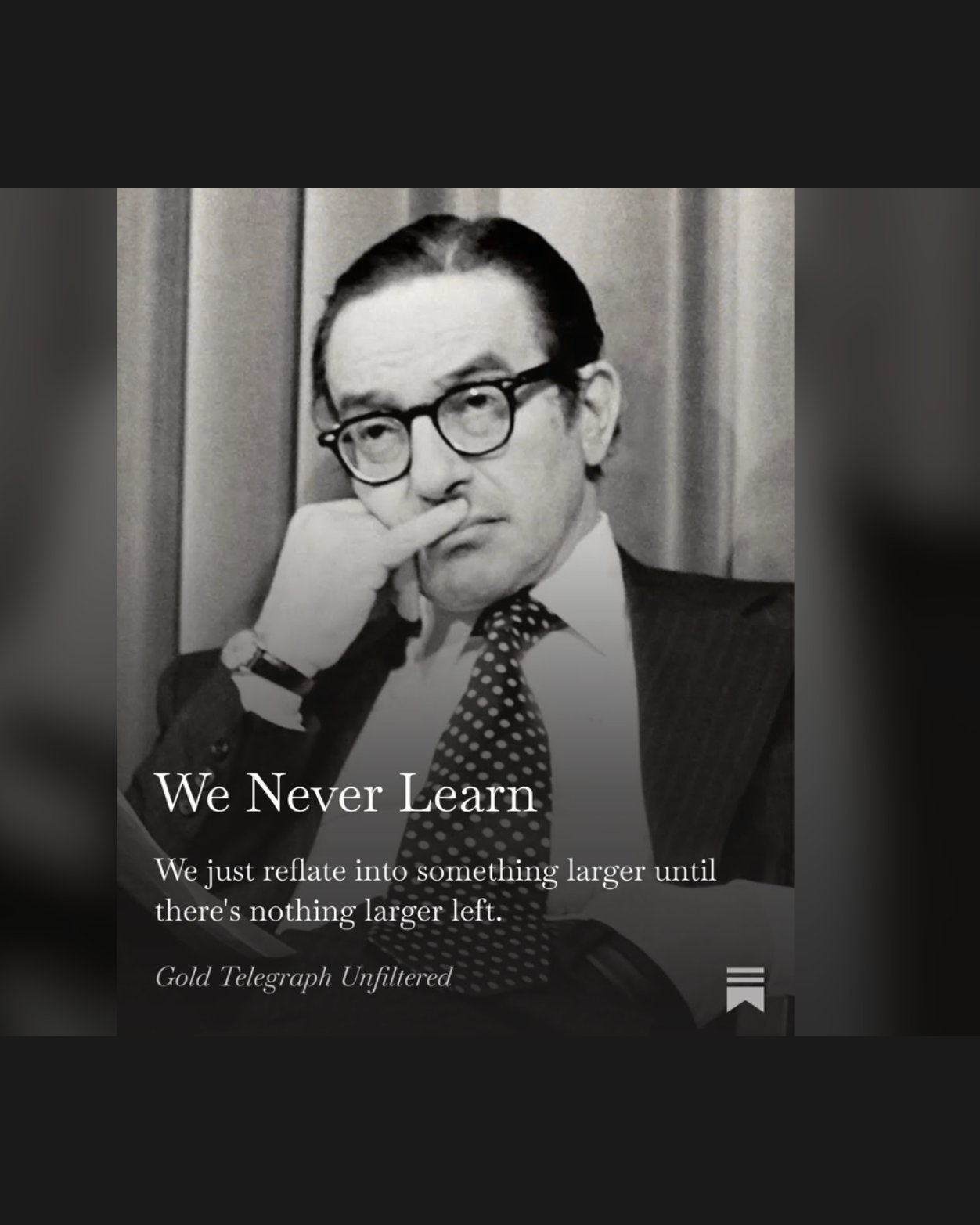
I have spent my entire career watching this financial system up close, running it through a historical lens, and it’s left me genuinely mystified, not confused, mystified at how we keep repeating the same mistakes and then acting shocked when they blow up in our face.
We never learn.
The truth is, I have been banging the drum on the sovereign bond bubble for years now.
I remember exactly what it got me the first time I said it out loud, years before many were even saying it. Mocked, dismissed, and laughed at.
Here’s the thing, I did not care about those reactions at the time, this is actually the main idea I’m trying to get across.
The key to my approach, the one that guides every decision I make about where to put my money, is all about seeing things before they become obvious to everyone else.
It’s that space between when I notice something and when the rest of the world catches on that’s really important. That’s where the real opportunities are.

If the buyback failing sounds familiar, it should.
The United States spent the summer trying to keep Japan from dumping Treasuries by quietly spending Europe's currency to do it.
I wrote about that one already titled: America's Yen Rescue Was Never About Japan.
The Same Mistake, Every Single Time
I was thirteen years old, watching the 2008 crisis happen in real time, and it’s the single moment I’d point to that changed the entire direction of my life.
I was already an economics nerd by then.
What really stuck with me was watching the actual banking system start to fall apart, watching adults I had always admired sit there consumed by fear, not concern, fear, and that’s what made it permanent.
That’s the moment this stopped being a hobby and became an obsession: understanding money, and the actual foundation of the system we all live inside of.
It’s funny how some things take a while to sink in. It wasn’t until 2015, working in the heart of Bay Street, that it finally clicked.
2008 wasn’t an isolated disaster. It was one entry in a pattern that’s been repeating since before my grandparents were even born, the same move, run over and over, each time on a bigger scale than the last.

It starts in 1907. A panic bad enough that Congress creates the Federal Reserve in 1913, specifically so it never happens again.
Then it happens again, the Federal Reserve watches its own first real test blow up in 1929, sixteen years after it was built for exactly this.
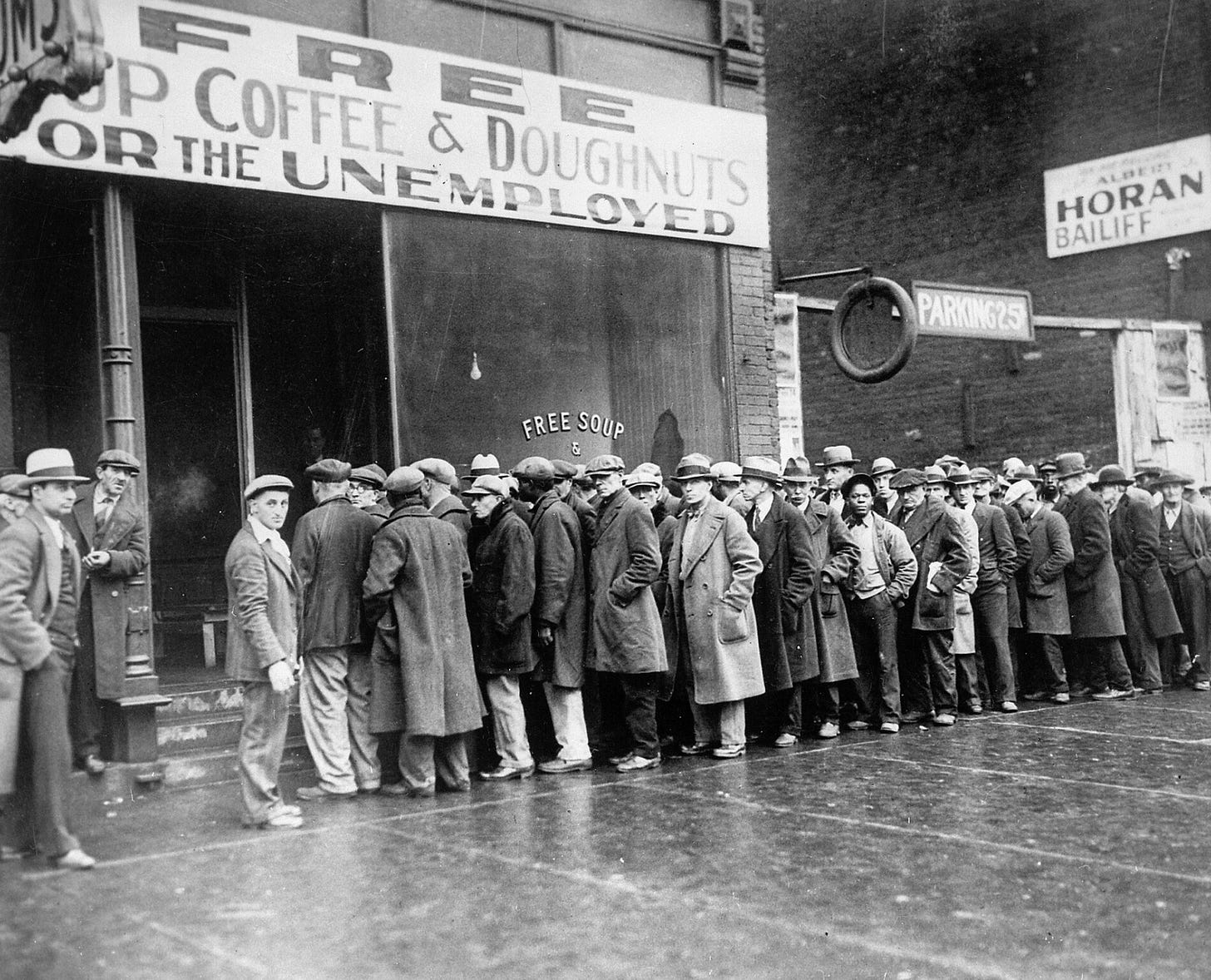
Lesson available: don’t let leverage run unchecked.
And the timeline just keeps rolling.
1971 — Nixon closes the gold window. 2000 — the dot-com bubble bursts, and Greenspan cuts rates and reflates into housing. 2008 — housing bursts, and Bernanke takes rates to zero, starts QE, and reflates into bonds. 2026 — the bond market is the bubble now.
Four lessons. Four times the lesson was sitting right in front of us. Four times we did the same thing anyway, just with a bigger number attached.
That’s not bad luck. That’s a track record.
Here’s the line I keep coming back to, more than almost anything else in this business. Greenspan, in a 1996 speech, asked out loud: “How do we know when irrational exuberance has unduly escalated asset values?”
It was a good question. He didn’t answer it in words. He answered it with what he did next, which was nothing.
He let the dot-com bubble keep running for another three-plus years, and when it finally popped in 2000, he didn’t let the excess clear. He cut rates instead.
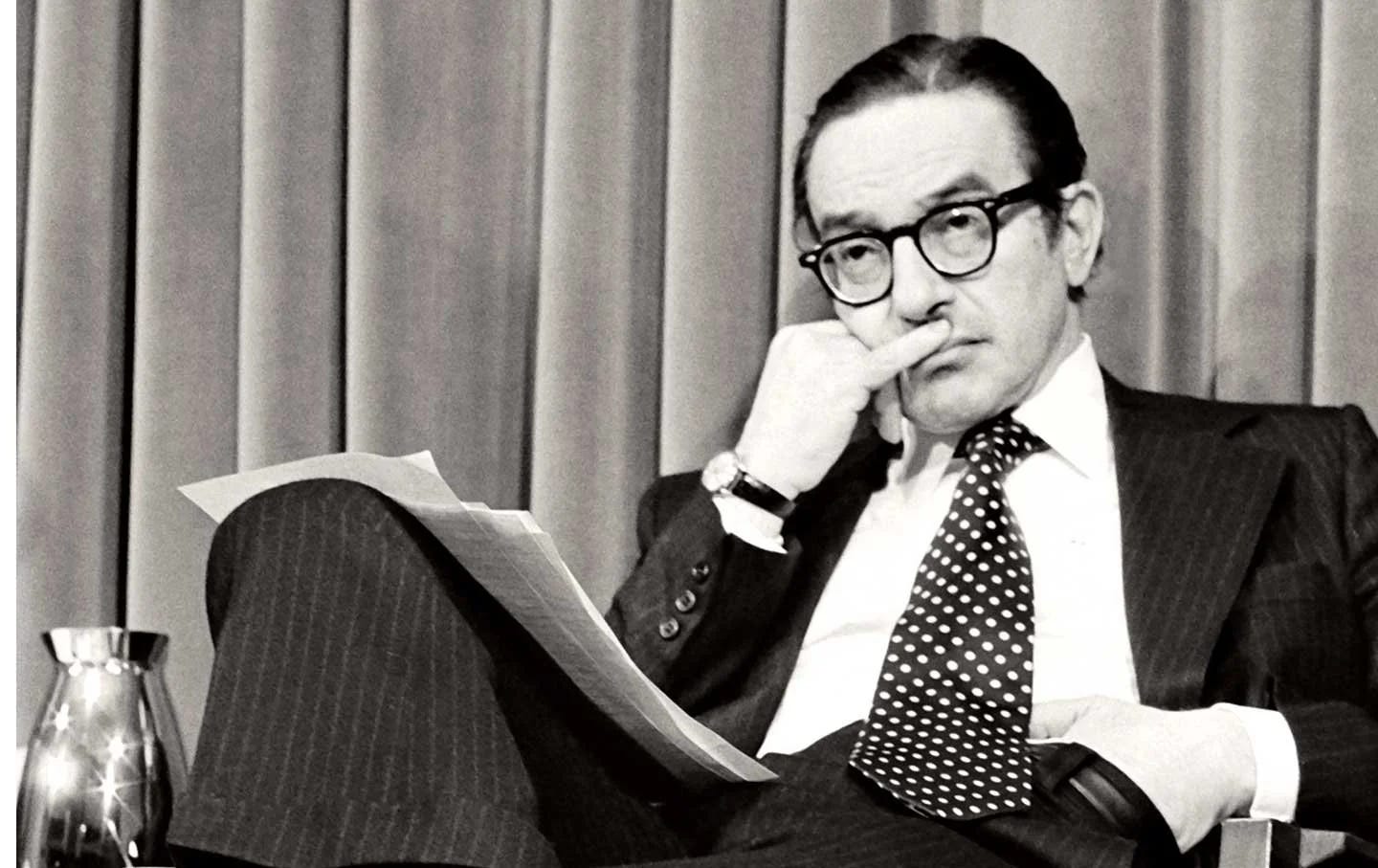
The real answer to his own question turned out to be:
We don’t know. And it doesn’t matter, as long as it isn’t hurting the real economy yet.
That wasn’t a mistake he made once.
That wasn't a mistake he made once. It became the doctrine we've operated under ever since, across five different Fed chairs now, two different parties in the White House, and three different bubbles.
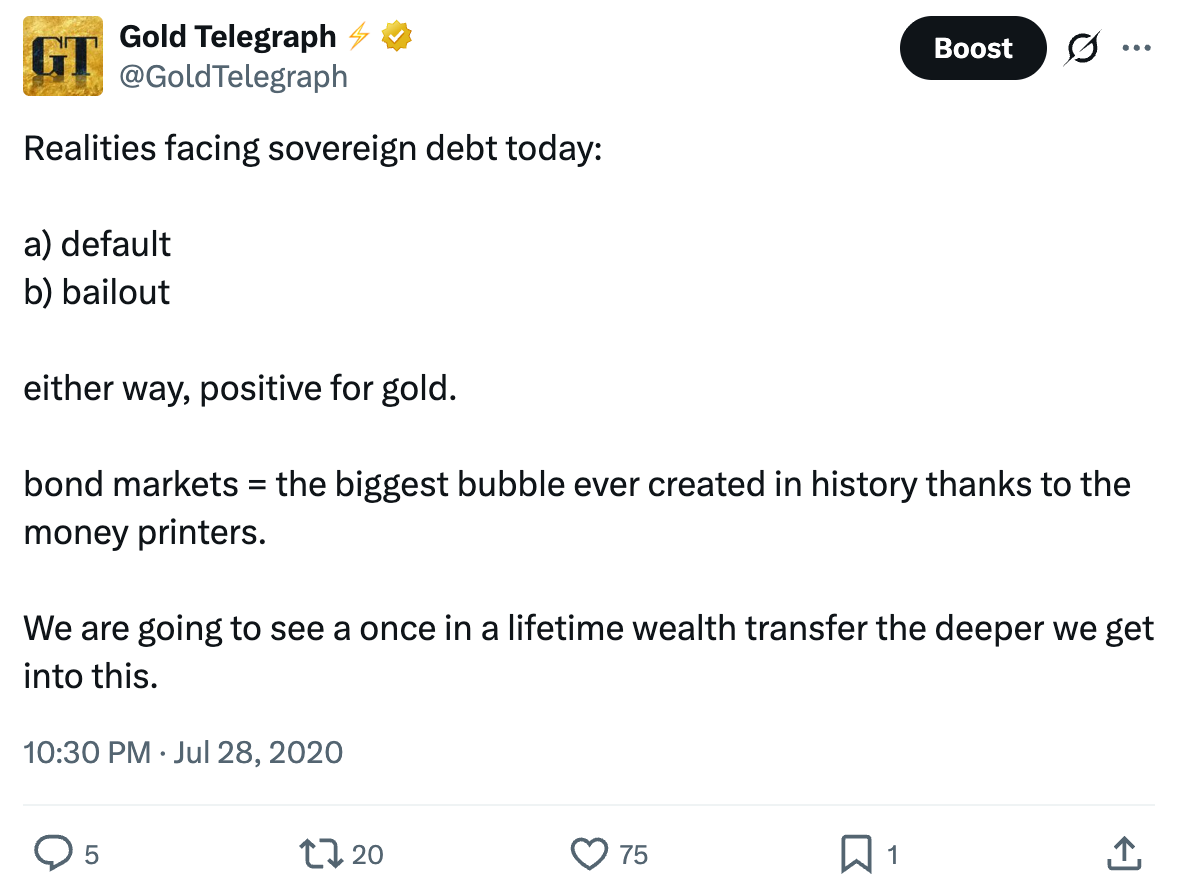
Every “fix” was really just a handoff.
Stocks handed to housing. Housing handed to Treasuries. Same trick. Bigger stage.
Why We Keep Getting Away With It… Until We Don't
Here’s the part that actually explains why we don’t learn, and it’s not because we’re stupid. The trick has worked every single time, right up until now.
Cut rates, reflate, buy a few more years.
That’s what Greenspan did in 2000. Bernanke did the same thing in 2008, then went a step further and added QE on top of it, because rates alone weren’t enough that time.
Things had been going smoothly enough that nobody in charge felt the need to ask what happens when it stops. And so far, it hadn’t. That’s the whole trap.
A postponed consequence looks an awful lot like no consequence at all, right up until the bill actually arrives.
Every time we reflate, it takes a bigger tank than the one before, and that part always gets left out of the celebration afterward.
Stocks were big. Housing was bigger. Treasuries are in the lead now, and “bigger” doesn’t even begin to cover it, they’re on a whole different scale altogether.
Treasuries are not like other investments. They are the standard everything else gets compared to.
So sit with this instead of rushing past it: after Treasuries, what’s next? What’s the next thing we reflate into once this one’s exhausted?
There isn’t one. That’s the whole problem in a sentence.
We didn’t just make the same mistake for the fourth time. We made it in the one place where we won’t get another chance to fix it.
This is why I’m betting on a monetary reset, and I’m not the only one who sees it coming.
Scott Bessent, the man now running Treasury, said it himself before he ever took the job:
"In the next few years, we are going to have some kind of grand economic reordering. Something equivalent to a new Bretton Woods."
And there is another problem. The Fed’s favorite emergency weapon, slashing interest rates, doesn’t have the room it once did.
The interest rate is currently between 3.50% and 3.75%. Rates dropped to zero back in 2008 and stayed there for about ten years. The United States system isn’t built for negative rates, so you can’t just cut below zero to buy more time. That option is off the table, in an economy still running hotter than the Fed’s own target.
It took me a while to really feel the impact, even though I understood it quickly.
When the Fed artificially crushes the Treasury yield, it isn’t just inflating a bond bubble on its own. It drags everything with it, stocks, corporate debt, your mortgage rate, because all of it prices off that one number.
Push down on the foundation and the building shouldn’t stay standing. But what if the foundation’s been faked? The numbers meant to keep it grounded stop reflecting anything real, and the whole thing starts floating, unmoored, disconnected from what’s actually happening underneath it.
After World War II, America’s debt burden collapsed relative to the size of its economy. Then, beginning in the 1980s, the direction changed. Total federal debt now sits around 121% to 122% of GDP.
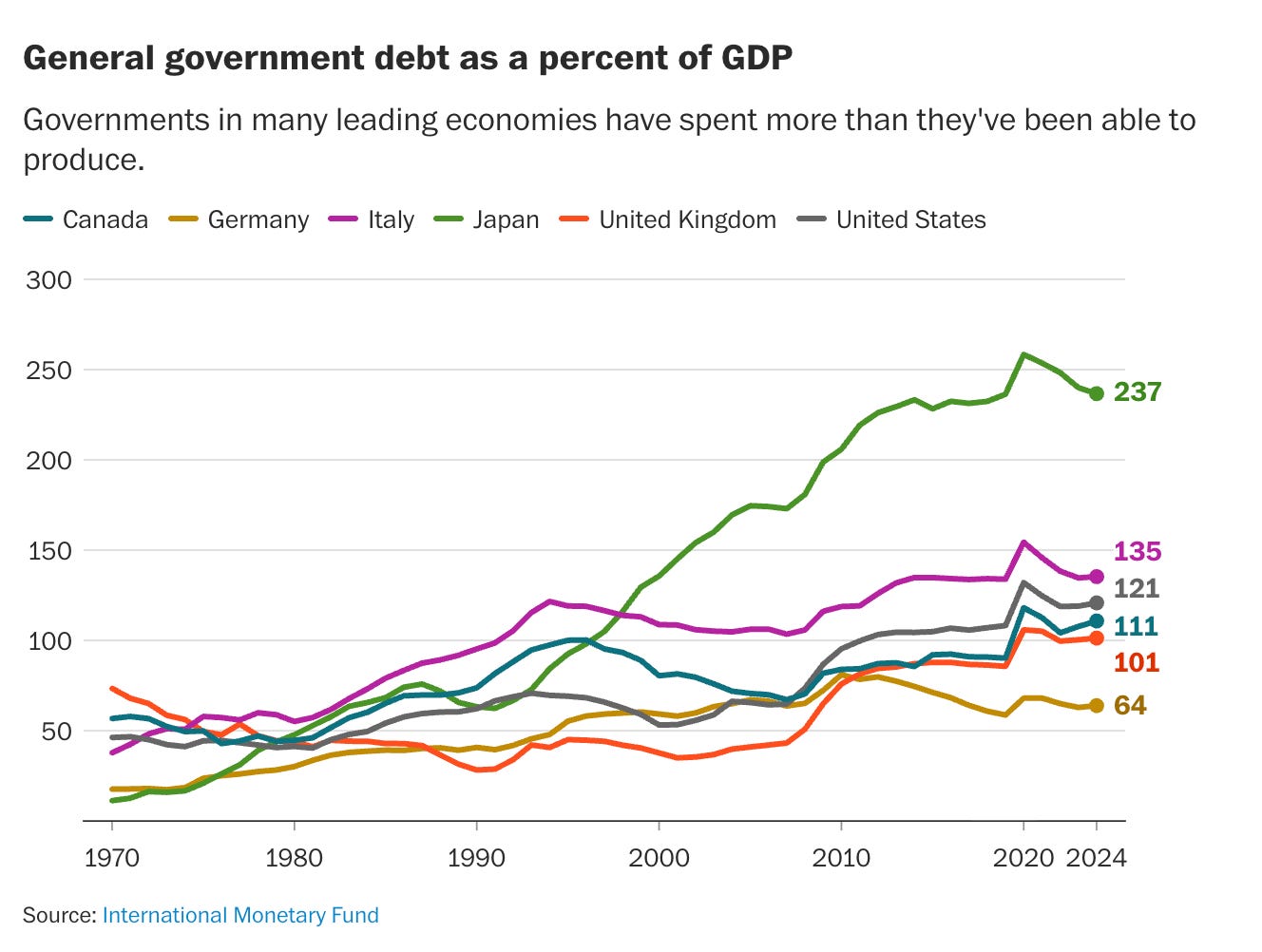
It’s increased significantly since 2000, when it was around 55%. Not because of one villain or one event, wars, the 2008 crisis, Covid, and a few other things all took their turn adding to the pile.
Strip out what one government department owes another and just look at the debt the public actually holds, and the number is 98.7 percent, as of this year’s first quarter.
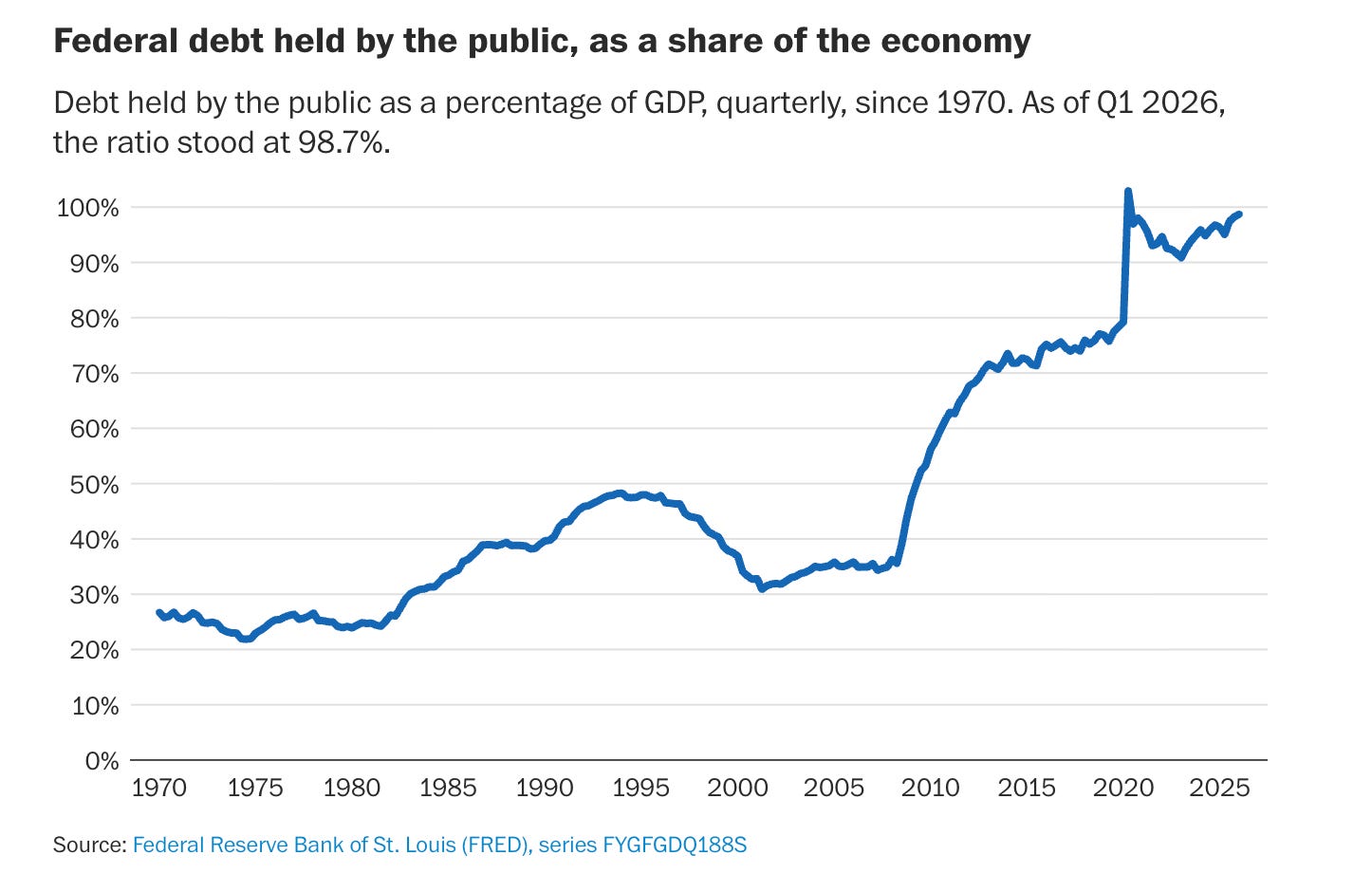
Pull up the chart and the story’s clear.
Debt held by the public was around 25% of GDP in 1970. Climbed toward 50% by the early ‘90s. Fell back to around 30% by 2000. Surged after the 2008 crisis.
Then 2020 hit. The line shot straight past 100% of GDP before settling slightly lower. Today, we’re right back near that same territory.
What’s Different Now
This is where the past stops and the present begins, because the present is where our tendency to repeat mistakes finally meets its match.
For about eighty years now, the term “risk-free” has been synonymous with one thing, US Treasuries.
The place capital runs when it’s scared of everything else. No questions, no second thought, just US Treasuries.
I have to say, I was completely caught up in the moment when it all went down.
It’s like someone turned off the lights, one minute Russia had access to a massive $300 billion in reserves, and the next, every central banker on the planet had to sit with the same question at the exact same moment:
If a sovereign’s own Treasury holdings can be frozen by someone else’s policy decision, what actually counts as safe anymore?
Many people seem to have arrived at the same conclusion: Gold is the way to go.
After what happened with Russia’s reserves in 2022, central banks have been snapping up gold at an unprecedented rate. Today, gold accounts for roughly 29% of all the reserves the world’s central banks have put aside. This is a massive shift.
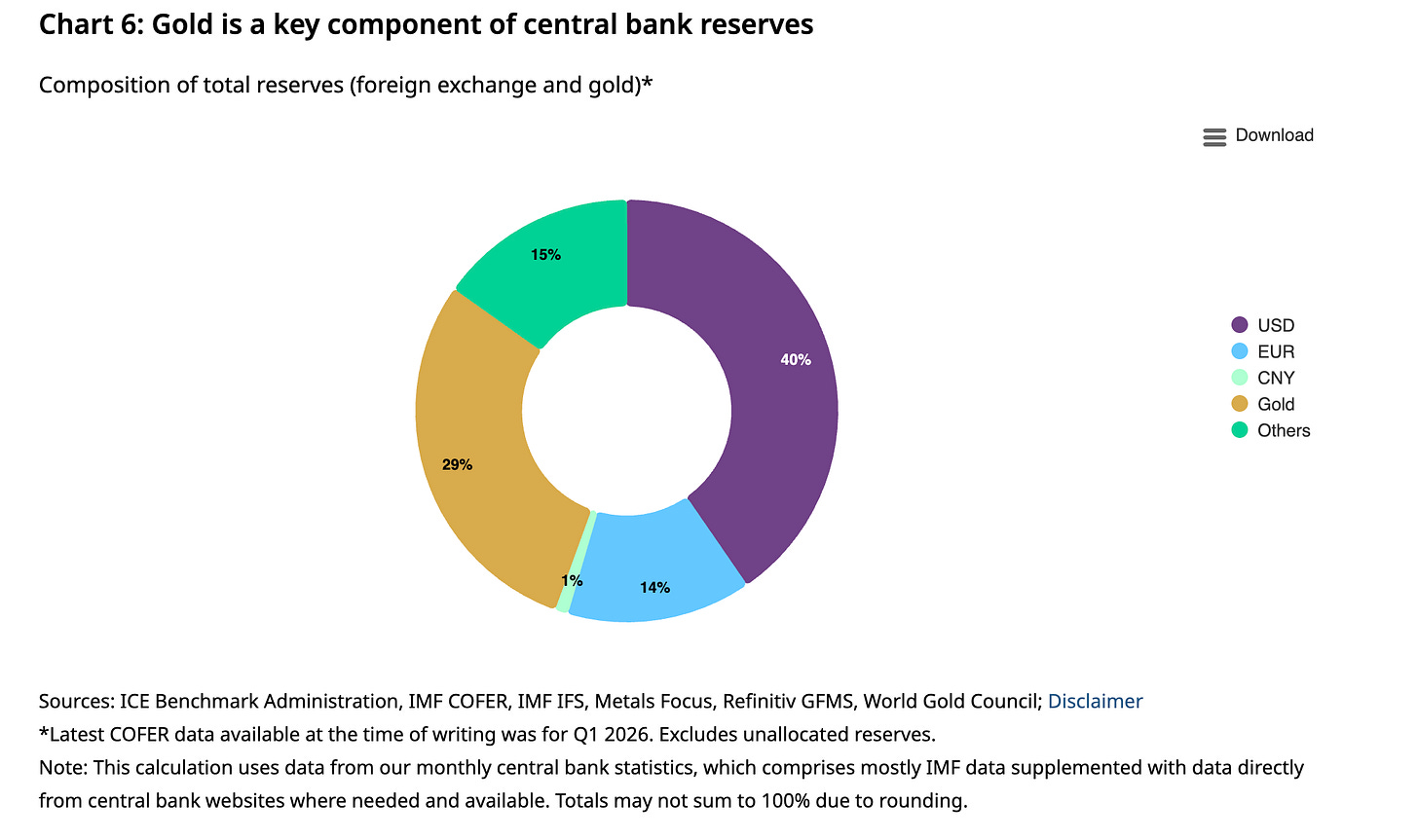
That’s not an error. That’s the central banks of the world who design the international monetary system quietly rewriting what “risk-free” means, in real time, while everyone was still arguing about inflation.
Here’s the number that actually stopped me cold.
Between March 2022 and October 2023, US 10-year real yields ripped higher, up roughly three percentage points, one of the most violent repricings in decades. Every model built on the pre-2022 relationship between gold and real rates was pointing to a drop measured in double digits.
That did not happen. Gold just... held.
Then came the real break. From the end of October 2023 to the end of October 2025, the price of gold went from $1,997 an ounce to $4,012.
That’s a really big increase in just two years. It doubled. While real yields stayed elevated the entire time.
The old rules, the ones that used to work, just don’t apply anymore. They didn’t bend, they broke, and they’re staying broken. I don’t think the timing is a coincidence, either. The relationship started falling apart right around the same moment the world found out that hundreds of billions of dollars in supposedly safe sovereign reserves could get frozen, essentially overnight, by someone else’s decision.
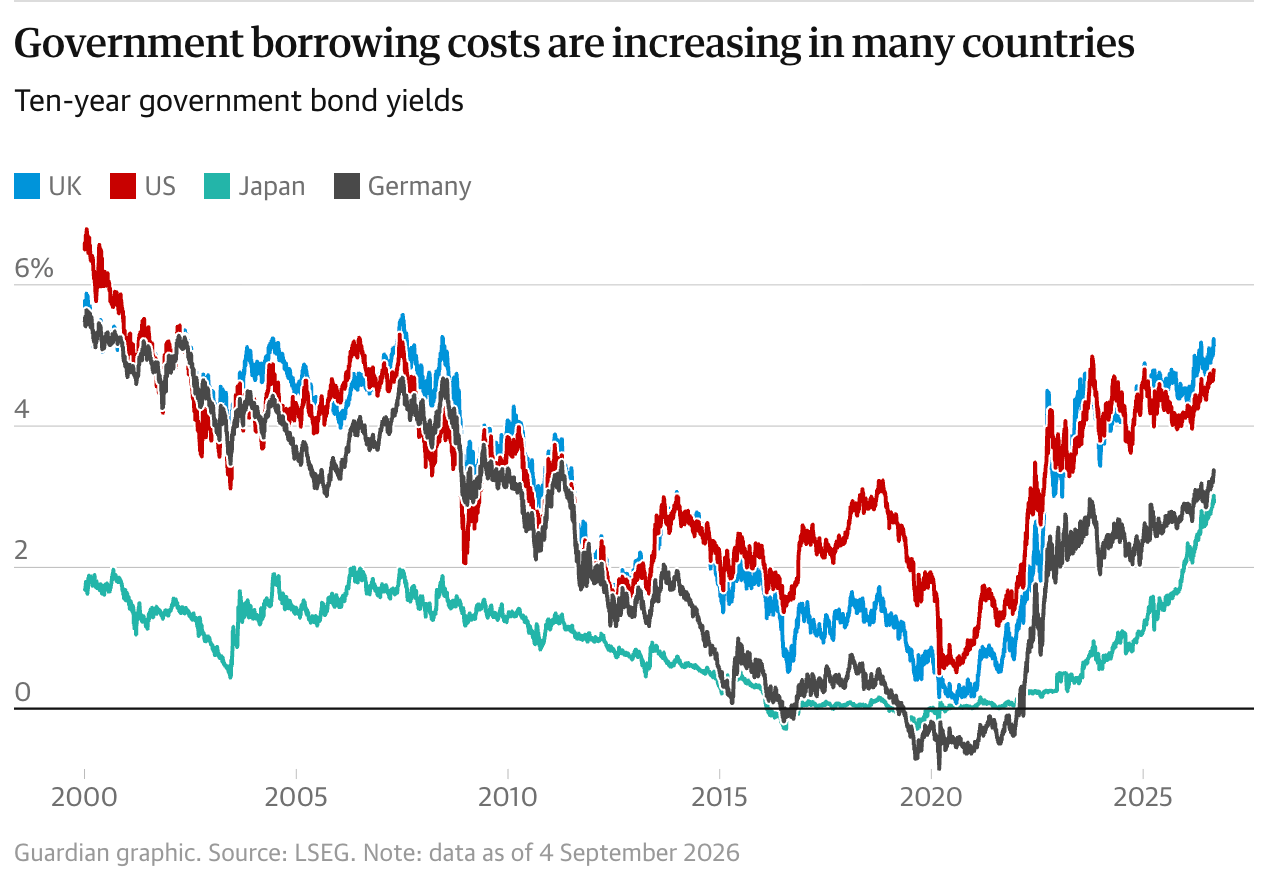
Recently, the 10-year Treasury hit its highest yield since January 2025.
Japan’s 10-year hit its highest point in thirty years.
German bunds climbed to levels last seen in 2011.
French bonds hit levels last seen in 2008.
The UK 30-year gilt yield reached about 5.89%, its highest level since 1998.
Every major economy that’s been running this same playbook is hitting the wall at roughly the same time, which tells you the wall isn’t a US problem. It’s the problem with the playbook itself.
Let’s look at the buyback in context. Bessent tried to make some changes, but they didn’t really work out. At first, the yields went down, but then they quickly went back up to where they were before, all in just one day. It’s the same old story, played out for the fifth time, but this time the stakes are higher and there’s no place to conceal the result.
And to make matters worse, it wasn’t the only crisis he was dealing with, like trying to put out multiple fires at once.
That same month he also stepped in to prop up the yen, specifically to keep Japan, the largest foreign holder of US debt, from being forced into a position where selling Treasuries was its only option.
Two interventions, one underlying panic:
Nobody, anywhere, wants to be the one holding US paper if this actually breaks.
Compare the buyback to what actually worked in 2010. QE2.
The Fed didn’t quietly buy some bonds, it stood up and told everyone in advance exactly how much it would buy and roughly when, and made clear it wasn’t going to be picky about price.
That’s not a policy statement. That’s a standing invitation to front-run the Fed.
Yields collapsed because the whole market had a one-way bet with the house behind it.
The buyback plan is more like a flexible idea, not a solid promise. Since there’s no guarantee that it will actually happen, traders can’t count on it and make moves based on that.
To make matters even worse, the cost of paying back all this debt is no longer just an idea, it’s a harsh reality now.
Around the year 2000, the amount of money paid in interest was roughly 2% of the country’s total GDP.
We’re talking about a staggering amount of money here… over $1 trillion, which is more than what the country spends on Medicaid or national defense.
And to put that into perspective, it’s now past the 3.2% mark and still climbing.
And here’s where the “we never learn” thesis stops being a metaphor and becomes a live policy fight.
The new Fed chair spent his Jackson Hole speech signaling that inflation, which has run above the Fed’s own target for more than five years now, needs to be dealt with, markets read it as a rate hike coming.
The president, on the other hand, has spent his time publicly demanding the opposite, going as far as threatening trade consequences against other countries if the Fed doesn’t cut, and telling his own handpicked Fed chair to “be patriots for a change.”
Bessent, for his part, keeps insisting the way out is growth, that America can grow its way out of a debt problem the same way he’s telling other indebted countries they should.
It’s a nice line.
But something I just can’t work my brain around is the math behind it.
The tax and spending bill passed this year is projected to require another $4.7 trillion in borrowing over the next decade, on top of a debt that already stands at $40 trillion.
This year alone the government is on pace to spend $2 trillion more than it takes in.
You cannot claim you’re growing your way out of a hole while digging the hole faster than the growth can fill it.
Two Doors, and We’re About to Find Out Which Lesson We Still Haven’t Learned
I’m not going to pretend I know which one gets opened, or when. Anyone telling you they know for certain is selling you something.
I am not.
Door one.
Just let things fall apart.
Yields rise. Debt service eats the rest of the federal budget. And when people realize even the “safe” investments aren’t as safe as they thought, it gets messy fast.
What that really means: the United States has to make hard choices, cutting the big entitlement programs people rely on, raising taxes, or both. None of that is easy, and none of it is politically free.
Door Two.
The government could decide to print more money, which would lead to inflation and reduce the real value of the debt.
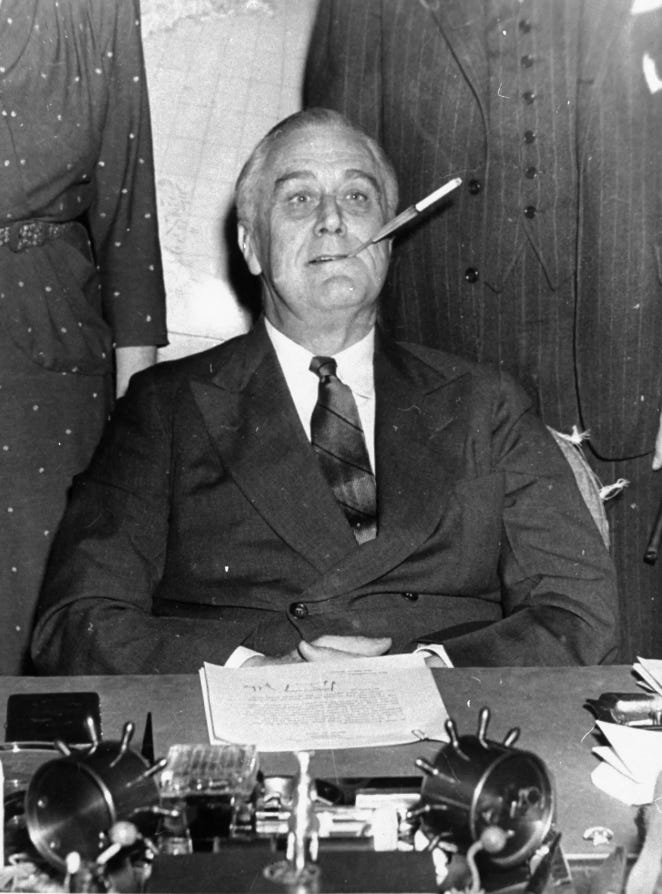
This is similar to what Roosevelt began doing in 1933, deliberately devaluing the dollar against gold as part of a broader reflation campaign.
It’s a sneaky way to deal with the debt…
This approach would be a way for the government to quietly manage the debt, without making any big announcements. And if I had to put my money on it, I’d say this is the path they’ll choose, simply because it’s a way to avoid making tough decisions and facing the consequences of their actions but it destroys the value of your currency in the process.
Gold Was the Answer Before We Needed Something Printable
Every one of these bubbles needed a risk-free asset to reflate into, right up until the asset that was supposed to be risk-free became the thing needing rescue.
Gold is the one thing that’s been constant all along. We stopped using it as a standard in 1971, and the reason is simple, you can’t just make more of it appear out of thin air when you need to pay your debts.
Gold’s value can’t be watered down by the same thing that we keep relying on, time and time again, which is essentially printing more money.
It’s the one asset that doesn’t lose its worth when we use that lever, and that’s what makes it so important.
We keep coming back to the same problem, and gold is the one thing that can’t be devalued, no matter what policymakers do to delay pain.
Gold is what is left standing once you’ve watched the same mistake made five times and stopped expecting the sixth attempt to go differently.
This is why I have said gold would always have the last laugh.
Where I land
I still think about that day in August.
The buyback amount was doubled, but it didn’t seem to make a difference.
The yields went down for a day, and then they just went back up to where they were before.
What I’m talking about isn’t a one-time mistake in a policy.
It’s a pattern that keeps happening over and over, and we’re currently in the middle of it.
The problem is that there’s no one bigger to pass it on to, and at the same time, every other major economy in the world is hitting the same roadblock for the same reasons, all around the same time.
We never learn. Not because we can’t.
Because it kept working long enough to convince us we didn’t have to.
This is the cycle where that stops being true.
- The Gold Telegraph.